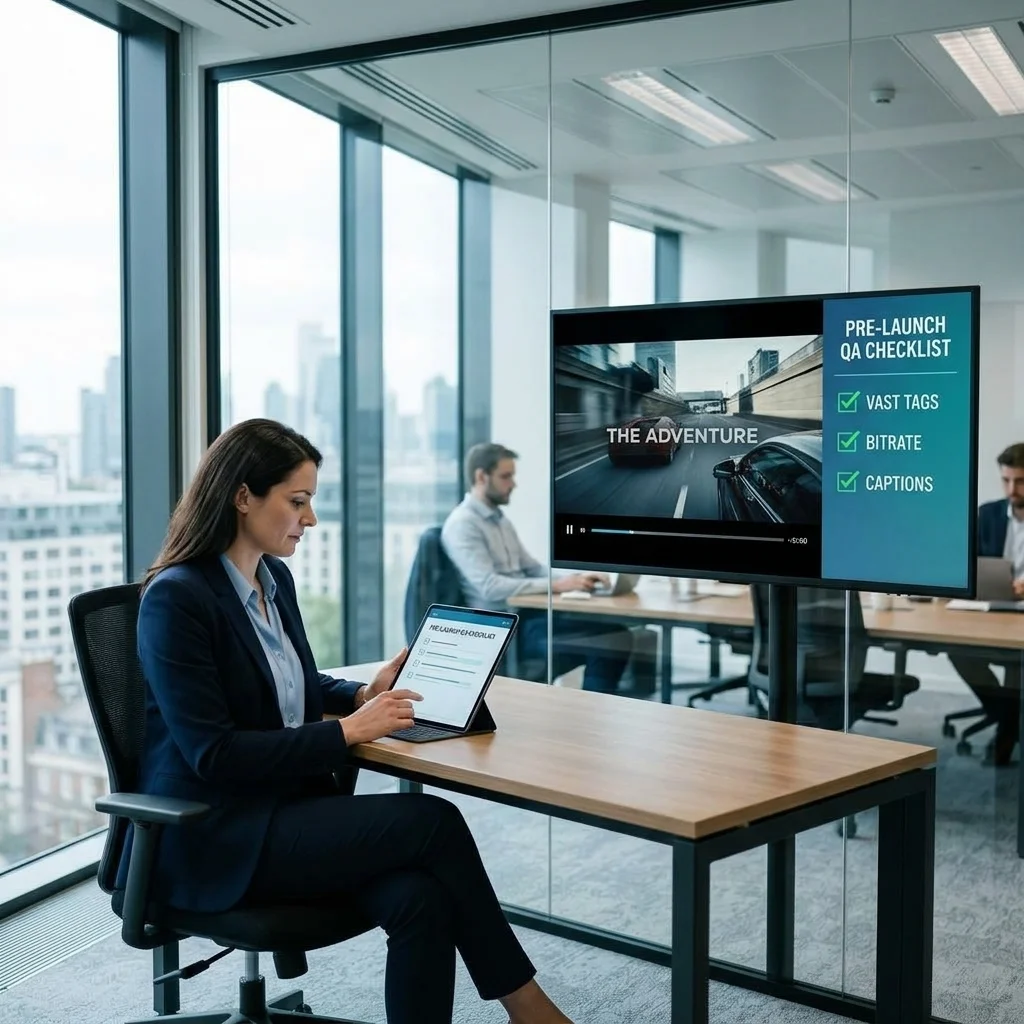



Programmatic outsourcing means giving some or all of your programmatic media buying work to an outside team that operates inside your demand-side platform (DSP) seats. The team builds campaigns, manages budgets and pacing, tunes bids, reviews inventory and reports on results. You keep strategy, the client relationship and ownership of the accounts.
This guide explains what an outsourced programmatic desk does in each major platform, how it compares with building in-house or using a fully managed service, and what to check before you sign. Our white-label programmatic desk and programmatic media buying service pages describe how we work.
1What an outsourced programmatic desk does
| Task | What it involves |
|---|---|
| Campaign build | Insertion orders, line items or ad groups, targeting, budgets, flight dates, creatives, brand safety and verification settings |
| Supply path and deal management | Choosing exchanges and deals, checking that deal IDs bid and win, removing poor supply |
| Pacing and budget control | Daily spend checks against plan, correcting under- and over-delivery, reallocating between line items |
| Optimization | Bid and bid modifier changes, audience and placement reviews, frequency control, creative rotation |
| Troubleshooting | Finding why a line item is not spending: targeting too narrow, bids too low, creative rejected, deal not live |
| Reporting | Platform reports, cross-platform reconciliation, and a summary of what changed and why |
2What it looks like platform by platform
Each DSP has its own structure and quirks. A provider should know the ones you use, not just general programmatic concepts.
Google Display & Video 360 (DV360)
DV360 is organized into partner, advertiser, campaign, insertion order and line item levels. Typical desk work includes line item setup with the right targeting and bidding strategy, managing floodlight activities and conversion counting with Campaign Manager 360, applying brand safety settings and managing exclusion lists, and checking which exchanges are driving delivery. Frequent issues are line items limited by narrow targeting, unlinked ad servers or creatives that were not approved.
The Trade Desk
The Trade Desk is built around campaigns, ad groups and a bid list structure, with strong tools for deals and supply path selection. Desk work includes building ad groups with the right audience and supply settings, managing bid lists, reviewing its path-to-purchase and reach reports, and monitoring deals. Frequent issues include bid factors stacking in ways that were not intended and ad groups with budgets that restrict delivery.
Amazon DSP
Amazon DSP can combine Amazon audiences with exchange supply, and is often used by brands that also advertise in Amazon's store. Desk work includes order and line item setup, audience selection, creative and landing page review, and reading attribution reports together with sponsored ads data. See our Amazon DSP management page and our comparison of Amazon DSP vs sponsored ads for detail.
Other DSPs, including those for CTV and DOOH, work on similar ideas but differ in terminology and controls. If you want a comparison across platforms, read our DSP comparison for agencies.
3A pacing and bid example
Here is an illustration, not a client result. Say a line item has a monthly budget and is set to spread spend evenly. By day 10, delivery is behind plan. A desk would check, in order:
- Is the line item active, within its flight dates, and has the budget not been capped by a parent insertion order?
- Are there creative approval or size issues limiting eligible placements?
- Is the targeting too narrow, for example a small audience plus a tight geography plus a high-viewability filter?
- Is the bid below what is winning? Check win rate and bid landscape reports where the DSP provides them.
- Is the frequency cap holding back a small audience?
Only after those checks would the desk raise the base bid or widen targeting, and it would log what was changed and the reason. A change made without a note makes it very hard to explain later why performance moved.
4In-house, outsourced desk or managed service?
| In-house | Outsourced desk | Fully managed service | |
|---|---|---|---|
| Who operates the platform | Your employees | The provider's team, in your seat | The provider, often in their seat |
| Account ownership | You | You | Often the provider (check the contract) |
| Control and visibility | High | High if you have access | Depends on the reporting provided |
| Fees | Salaries, training, tools | Service fee, often fixed or per task | Often a media markup or fee on spend |
| Scaling up or down | Slow (hiring) | Faster, depends on the contract | Fast |
| Best for | Steady, high spend with an experienced team | Agencies and brands that want operators without full-time hires | Teams that want to buy results, not operate a platform |
The most important line is account ownership. If your campaigns run in the provider's seat, moving away later means rebuilding audiences, deal histories and learnings. Ask about this early.
5Supply path and fees
Programmatic costs include more than the bid price. Platform fees, data fees, verification fees and exchange take rates all reduce how much of each dollar reaches working media. A good desk can show you the fee layers on your campaigns and explain which supply paths it uses and why. Ask whether the provider takes any undisclosed margin, such as principal-based buying where it resells inventory, and require that any such arrangement be stated in the contract.
Some DSP buyers use minimum spend thresholds, and the amounts vary by platform and by whether you use a managed or self-serve seat. Confirm current terms directly with each platform instead of relying on old figures.
6Identity, consent and measurement
Browsers such as Safari and Firefox already restrict third-party cookies, and consent rules such as GDPR limit how personal data can be used. This affects audience targeting and conversion measurement. A competent desk should be able to explain which of your campaigns depend on third-party identifiers and what alternatives you can use: contextual targeting, first-party audiences, curated deals or retailer and publisher data. See our identity and cookieless readiness page for more.
7How to evaluate a provider
- Ask which DSPs the team uses daily and request a walkthrough of how they would diagnose an underdelivering line item.
- Ask who will be in your account, how they are trained and what happens if one of them leaves.
- Review a sample report. Does it explain changes, or only list numbers?
- Check how access, change logs and approvals work.
- Confirm account ownership, fees and the exit process in writing.
- Start with a short pilot on a few campaigns and measure what matters to you: setup speed, errors, communication quality.
8Frequently asked questions
Can I outsource only part of my programmatic work?
Yes. Many teams start with setup and QA, then add pacing checks and reporting, and keep strategy and optimization decisions in-house. Splitting the work by task is usually safer than moving everything at once.
Do I need to give up control of my DSP seat?
No. In an outsourced desk model the provider works with named users in your seat, and you can see every change. If a provider asks you to move spend to their seat, that is a different model, so compare the terms carefully.
Will outsourcing improve performance?
It depends on what is holding performance back. If your constraint is capacity or platform knowledge, outside operators can help. If the constraint is poor creative, weak targeting strategy or unclear goals, outsourcing execution will not fix it on its own.
9Next step
If you want to talk through a pilot, contact us with the DSPs you use, rough monthly spend and the tasks you want to hand off.