

The challenge
An automotive brand wanted more test drives for a new luxury SUV across several major cities. The audience was affluent and busy, and the brand could not accept placements that would cheapen a premium launch.
Our approach
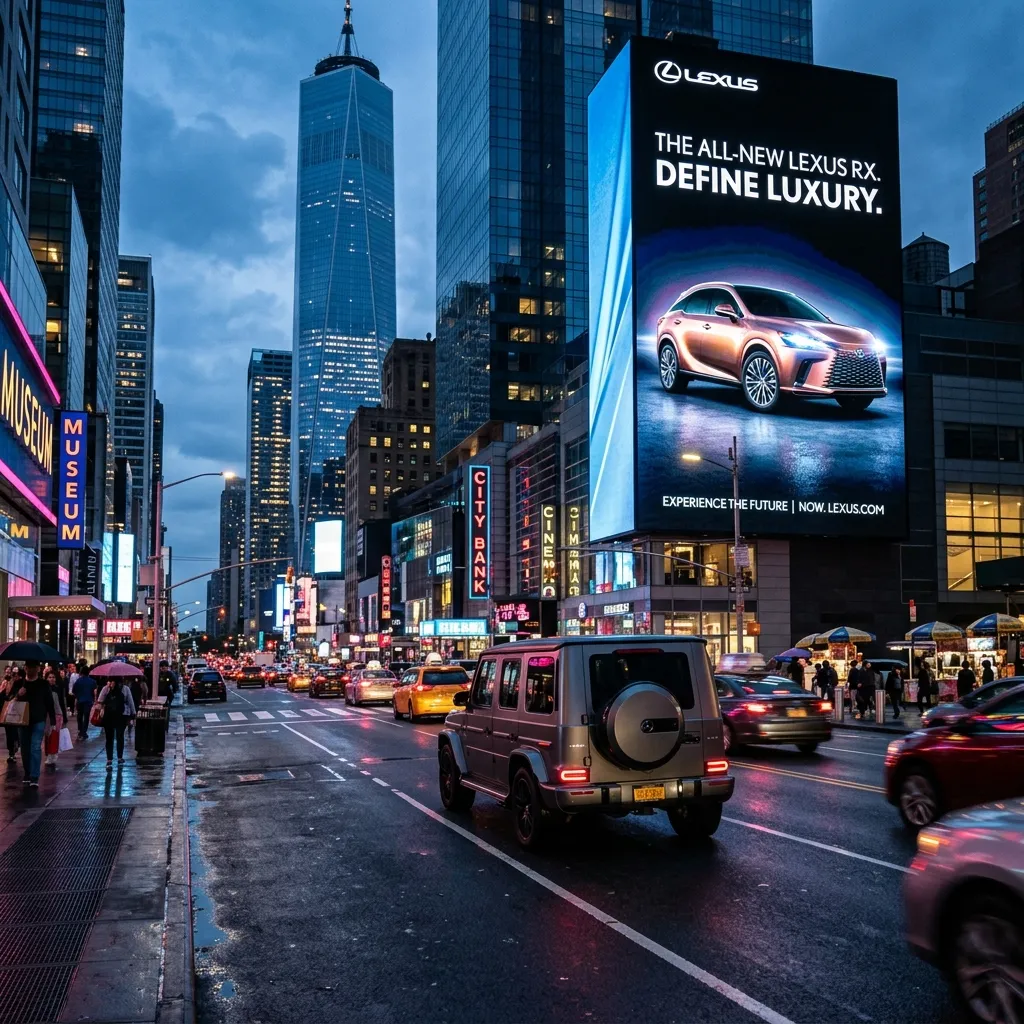
We ran a programmatic DOOH campaign on roadside billboards, transit hubs and premium shopping centers. Screens and delivery windows were chosen from travel routes and peak traffic hours in each city.
The outcome
The campaign ran on more than 320 digital screens. Dealership visits rose 14% and test-drive bookings rose 8%. The figures cover the campaign as a whole; this summary does not include the baseline, flight dates or how visits were measured.
The Client and Context
The advertiser was an automotive brand with a clear commercial goal: get more people into dealerships to drive its new luxury SUV. Awareness alone was not enough. The audience was affluent, busy and spread across several major cities, and the brand could not accept placements that cheapened a premium launch. That ruled out broad reach buying and pointed toward a plan built around where buyers actually travel and when they are most receptive.
Out-of-home suits this kind of brief because the commute is predictable. The difficulty is that screen networks differ widely in format, location quality and availability. The brand needed one team to translate a showroom goal into a screen plan, keep delivery consistent across cities, and report on visits and bookings rather than impressions alone.
How the Work Was Organized
The team started from movement, not from inventory lists. Roadside billboards, transit hubs and premium shopping centers were selected because they sit on the routes and in the moments that matter to SUV shoppers. Delivery was then shaped around peak traffic periods in each city, so budget concentrated where footfall was strongest. Creative stayed simple and legible at a glance, with one clear prompt to book a test drive.
Once the campaign was live, optimization ran continuously rather than at the end. Pacing, screen performance and delivery windows were checked against the plan, and weaker placements were adjusted while the flight was still running. Brand safety was part of that routine, with placements reviewed so the ads stayed in environments that suited a luxury vehicle. Our programmatic DOOH buying workflow describes the same sequence in more detail.
What Changed for the Team
For the brand's marketing team, out-of-home stopped being a block of media bought on faith. They could see how screens, cities and time windows related to dealership visits and test-drive bookings, which are the numbers the sales team tracks. Visits and bookings gave marketing and sales a shared result to discuss, instead of separate views of reach and showroom traffic.
It also made the next burst of activity easier to plan. With a clear record of which environments and time periods earned their budget, the team could brief later campaigns with more confidence. Anyone weighing the approach can compare DOOH and programmatic DOOH, or read how we run near-store and programmatic DOOH campaigns for brands and agencies.
Key takeaways
- Plan out-of-home around the routes and moments buyers actually travel, not around the biggest list of available screens.
- Tie the campaign to a showroom outcome such as visits and bookings, so results can be judged beyond impressions.
- Optimize while the flight runs, adjusting weak placements and time windows instead of waiting for a post-campaign review.
- For premium brands, review placement environments as part of delivery so brand safety is maintained throughout, not only at planning.
Driving real foot traffic using targeted digital billboards.