

Digital screens are absolutely everywhere these days. From the massive, glowing billboards you pass on the highway during your morning commute, to the interactive digital kiosks in your local shopping mall, and even the screens flashing promotions at the gas pump while you refuel—outdoor advertising has firmly entered the digital age. But here is the critical thing that many marketers misunderstand: not all outdoor digital advertising is created equal. The simple fact that an ad is playing on an LED screen rather than being printed on a massive sheet of vinyl does not mean the underlying media buy is modern or efficient.
The mechanisms by which we plan, purchase, serve, and measure ads on these digital screens have undergone a massive, structural transformation in recent years. In this comprehensive deep dive, we are going to break down the fundamental, architectural differences between traditional Digital Out-of-Home (DOOH) and Programmatic DOOH (pDOOH). We will explore why this shift matters so profoundly to the bottom line, how it alters the daily workflows of media buyers, and why programmatic execution is rapidly becoming the gold standard for modern, agile marketers who demand accountability for their media spend.
1What is DOOH?
Digital Out-of-Home (DOOH) refers broadly to any digital advertising screen located in a public environment that is visible to consumers while they are outside of their homes. It represents the natural, technological evolution of the classic paper billboard. Instead of paying a crew to physically climb a scaffolding structure and paste a massive, weather-resistant vinyl sheet over a wooden board, advertisers can now transmit vibrant, high-resolution digital video files or dynamic HTML5 creative directly to the display.
However, for a very long time, the way an advertiser actually *bought* this digital space was functionally identical to buying a physical, static billboard. Advertisers, or their designated media buying agencies, had to negotiate direct, manual contracts with the major media owners who controlled the physical infrastructure—think massive global conglomerates like Clear Channel, JCDecaux, Lamar, or OUTFRONT Media.
This process was inherently labor-intensive. A media buyer would typically issue a Request for Proposal (RFP), receive a spreadsheet of available screen locations, negotiate CPMs based on historical traffic estimates, and ultimately purchase a specific screen or a network of screens in a specific geographic market for a fixed period. You handed over your creative file, and it played on a continuous, fixed loop alongside a handful of other advertisers who had bought the same loop. If your ad was in a 60-second loop with five other advertisers, you got 10 seconds of screen time per minute, constantly rolling 24/7.
2What is pDOOH?
Programmatic Digital Out-of-Home (pDOOH) fundamentally upgrades and restructures this entire ecosystem by injecting automation into the planning, buying, and targeting phases of the campaign lifecycle. Instead of picking up the phone to negotiate fixed timeslots and minimum spend commitments with individual media owners, media buyers can now use a sophisticated Demand-Side Platform (DSP) to bid on screen inventory in real-time.
This mirrors the exact same technological process used to buy online display ads, pre-roll video on YouTube, or Connected TV (CTV) inventory. When a screen becomes available—or when the audience passing by that screen matches the advertiser's target demographic—the DSP evaluates the opportunity, references the campaign's parameters, and submits a bid in milliseconds. If the bid wins, the ad is served.
3DOOH vs pDOOH
Understanding the deep architectural differences between traditional and programmatic DOOH allows media planners to construct more effective, omnichannel strategies that leverage the unique strengths of both buying methods. Here is how they stack up against each other.
Traditional DOOH
- Manual negotiations, lengthy RFPs, and signed IOs
- Fixed schedules (usually bought in blocks of weeks or months)
- Audience estimated broadly by static location and historical traffic
- Static digital loops running continuously regardless of context
- Upfront, inflexible budgetary commitments with zero agility
Programmatic DOOH
- Automated buying via DSPs connected to multiple SSPs
- Real-time flexibility to start, pause, scale, or shift budgets
- Data-driven audience and behavioral targeting based on mobile ID aggregation
- Dynamic, context-aware creative triggers (weather, sports, traffic)
- Optimized, efficient ad spend based on real-time performance and pacing
4Benefits of pDOOH
The core benefit of pDOOH is unprecedented agility. Campaigns can be activated, paused, scaled up, or optimized instantly with the click of a button in a dashboard. You are no longer locked into a binding four-week contract if the strategy needs to pivot on day three. If a snowstorm hits the East Coast, a retailer can instantly pause their DOOH spend in New York and reallocate those dollars to screens in sunny Florida—all without sending a single email to a sales rep.
Furthermore, pDOOH unlocks highly sophisticated, data-driven targeting capabilities that were previously unimaginable in the outdoor space. By aggregating anonymized mobile location data, SDK data, and geospatial intelligence, advertisers can target screens that index highly for specific demographics or behaviors at very specific times of day. Want to reach hardcore fitness enthusiasts? You don't have to buy a billboard for a whole month; you can bid exclusively on screens located within a one-mile radius of high-end gyms, but only between the hours of 6:00 AM and 9:00 AM, and 5:00 PM and 8:00 PM. This drastically reduces wasted impressions.
5How pDOOH Works
At its core, pDOOH functions through an automated ecosystem of Demand-Side Platforms (DSPs) and Supply-Side Platforms (SSPs). Media owners connect their digital screens to SSPs, outlining exactly when the screens are available and setting floor pricing. On the other side, agencies and advertisers log into their DSPs (like Vistar Media, Hivestack, or Broadsign) to set up campaigns, define budgets, establish targeting parameters, and upload creative assets.
When the conditions match—for example, it starts raining near a mall where an advertiser wants to promote umbrellas—the SSP sends a bid request to the DSP. The DSP instantly evaluates the request against the advertiser's criteria and submits a bid in real-time (RTB). If the bid is the highest, the ad is instantly transmitted to the screen and displayed to the passing audience. This entire transaction occurs in milliseconds, completely bridging the gap between digital precision and physical presence.
6Industries Using DOOH
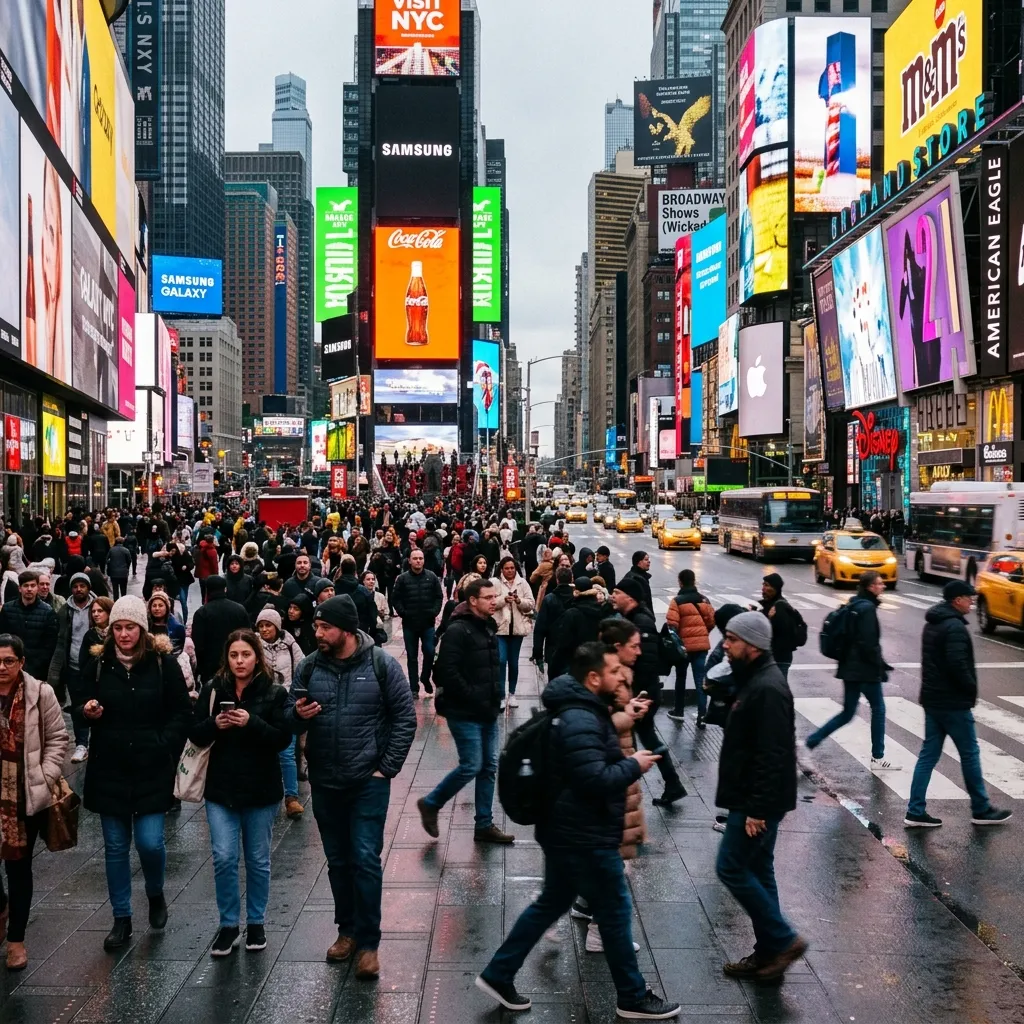
The adoption of DOOH and pDOOH spans almost every major consumer-facing industry. Retailers leverage dynamic DOOH to drive foot traffic by advertising flash sales or directing shoppers to the nearest brick-and-mortar location. The entertainment industry heavily utilizes massive digital boards in high-traffic urban centers to build blockbuster awareness and hype for upcoming movie releases or streaming premieres.
Additionally, automotive brands use pDOOH to target specific highways during rush hour with contextual messaging, while FMCG (Fast-Moving Consumer Goods) companies dominate point-of-sale screens in grocery stores and pharmacies to influence purchase decisions at the critical final mile. Essentially, any brand that relies on physical-world presence and broad awareness is fundamentally reallocating budgets toward programmatic outdoor media.
7Why Choose AdOps Media?
Navigating the shift from traditional to programmatic DOOH can be technically daunting. The ecosystem is fragmented, measurement standards are complex, and executing an omnichannel campaign requires deep expertise in ad trafficking and DSP management. This is where AdOps Media steps in. We act as the invisible backend powerhouse for agencies and brands, providing the hands-on-keyboard expertise needed to execute flawlessly.
Our specialized trafficking and programmatic teams manage the heavy lifting—from setting up complex geofencing parameters and dynamic creative triggers, to ensuring pixels are firing correctly for accurate footfall attribution. By outsourcing your DOOH operations to our seasoned experts, you eliminate costly errors, significantly speed up campaign launch times, and ensure that every dollar of your media spend is optimized for maximum real-world impact.
8Conclusion
The integration of programmatic technology into outdoor media bridges a massive, historical gap in the advertising ecosystem. For years, Out-of-Home sat somewhat isolated as a pure, top-of-funnel brand-awareness play, while performance marketers obsessed over lower-funnel metrics, granular targeting, and real-time optimization. pDOOH fundamentally changes that dynamic. It brings strict accountability, radical flexibility, and a data-driven approach to the unmissable canvas of the physical world.
As measurement protocols continue to improve and spatial data becomes increasingly refined, pDOOH empowers brands to execute highly coordinated, omnichannel campaigns. The manual, rigid processes of the past are rapidly giving way to an intelligent, automated future. If you aren't actively testing and scaling pDOOH for your next major campaign, you are leaving a massive amount of operational efficiency and ultimate ROI on the table.