

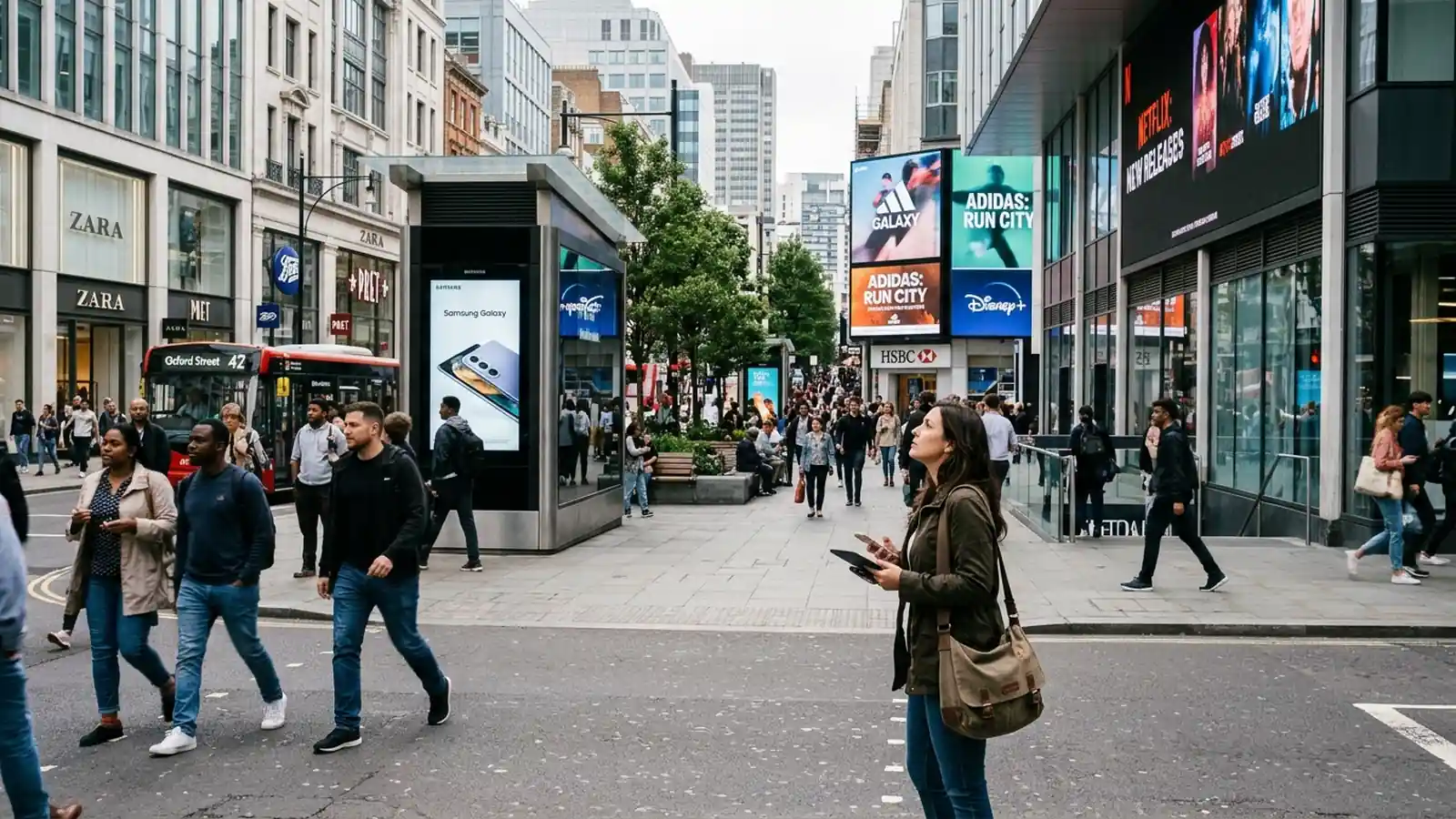
Digital screens now sit in airports, train stations, shopping centers, gyms, taxis and along the roadside. Not long ago, putting an ad on one of them meant a phone call to the screen owner, a fixed slot booked weeks ahead and a creative file emailed to an operations team. Programmatic DOOH replaces most of that with the same kind of automated buying that brand marketers already use for online video and display.
In plain terms: programmatic digital out-of-home (pDOOH) means buying ad time on digital screens in public places through software, using a demand-side platform to bid for plays on screens that a supply-side platform has made available. You choose the audience, places and times you care about, set a budget, and the platforms decide which screens show your ad and when. The result is reported back as plays and estimated impressions rather than as a single fixed poster site.
1What Programmatic DOOH Actually Means
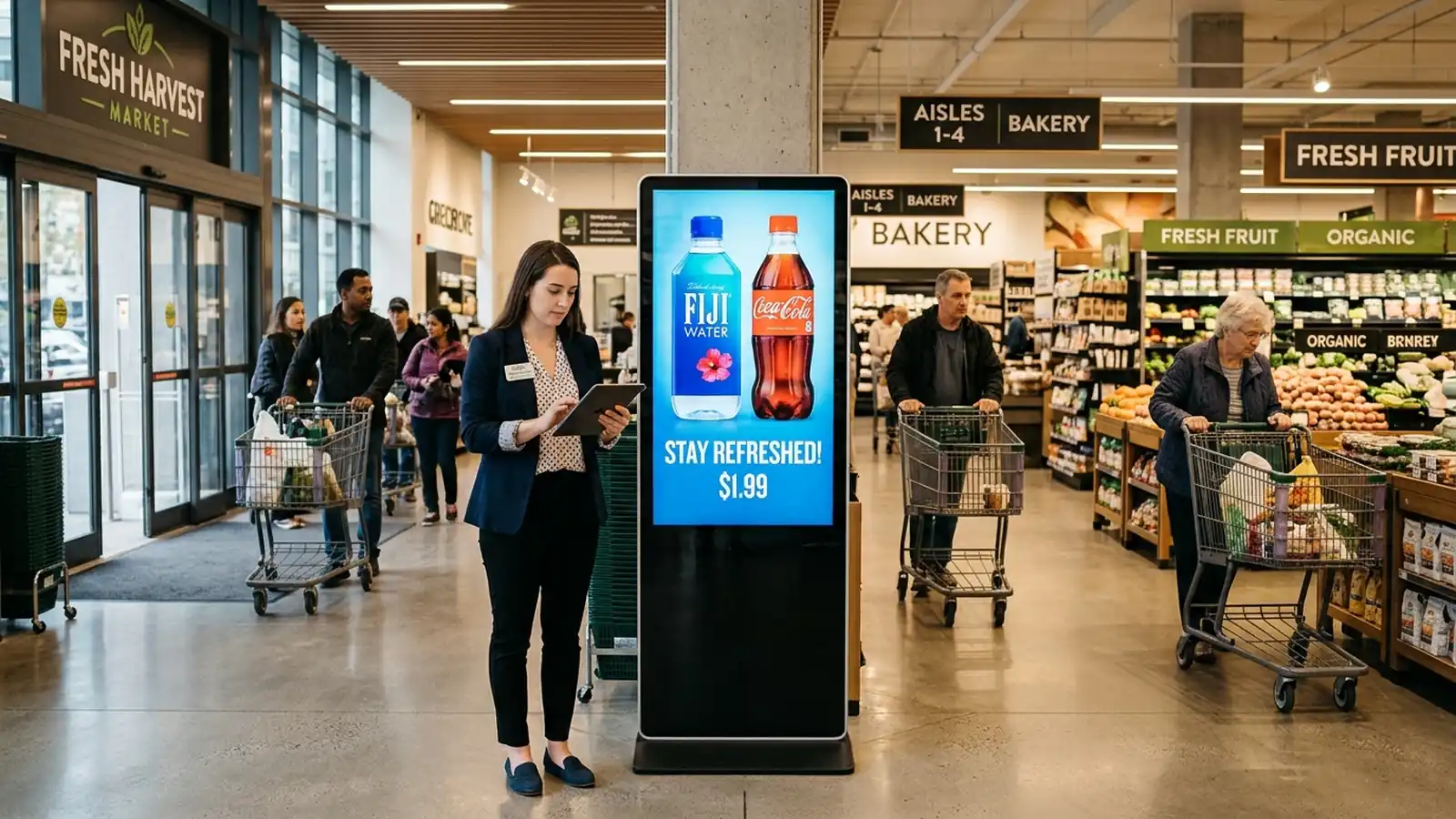
Digital out-of-home is any advertising shown on a digital screen outside the home. That covers large roadside displays, transit shelters, screens inside malls and convenience stores, elevator screens in office buildings, and screens in taxis and rideshare vehicles. Unlike a printed poster, a digital screen can rotate many advertisers through the same space, one after another, in a loop.
Programmatic means the buying and selling of those loop slots is automated. Instead of agreeing a flat rate for a package of screens over a month, a buyer sets up a campaign in a platform, defines targeting and budget, and the system places the ad whenever the conditions match. It can be bought through a direct deal with a media owner or through an open marketplace, and often both sit in the same plan.
It helps to think of it as a different way of purchasing the same physical medium. The screens, the audiences walking past them and the requirement for good creative are the same as ever. What changes is how you find the screens, how you pay for them and how fast you can change your mind.
2How the Buying Pipeline Works
Several systems take part in every play, and it is worth knowing their names because they appear in every proposal and report.
- Media owner. The company that owns or operates the screens, such as Clear Channel, JCDecaux, Outfront or Lamar, or a local network of venue screens.
- Content management system (CMS). The software that stores the creative files and tells each physical screen what to play.
- Supply-side platform (SSP). Connects the media owner's screens to buyers and describes each screen's location, size and available time. Vistar Media, Hivestack, Place Exchange, Broadsign and VIOOH are well-known names on this side.
- Demand-side platform (DSP). The tool the buyer uses to plan, target, bid and report. Some DSPs, including The Trade Desk and DV360, can buy DOOH alongside other channels, while others focus on out-of-home.
- Data and measurement providers. Sources of audience, mobility and visit data that shape targeting and reporting. Industry bodies such as Geopath, OAAA and DPAA publish audience measurement approaches and standards.
When a screen has a slot to fill, the SSP announces it, the DSP evaluates whether it matches a live campaign, and the winning ad is sent to the screen's CMS to be played. Our guide to comparing DOOH and pDOOH platforms goes through how these tools differ in practice.
3How It Differs From Traditional Out-of-Home
Traditional out-of-home is bought in advance, in fixed blocks, at an agreed rate. Programmatic gives you more control, but it also asks more of you in setup and monitoring. The table below summarizes the practical differences. If you want the full comparison with a decision framework, read DOOH vs pDOOH.
| Area | Traditional DOOH | Programmatic DOOH |
|---|---|---|
| Booking | Negotiated directly, usually weeks ahead | Set up in a platform, often live within days once creative is approved |
| Unit of purchase | A package of screens for a fixed period | Plays or impressions, priced on a CPM basis |
| Targeting | Chosen by location and venue type | Location plus audience, time of day, weather and other triggers |
| Changes mid-flight | Slow and often limited | Budgets, locations and creative can be adjusted during the campaign |
| Reporting | Post-campaign summary | Play logs and estimated impressions, often available during the flight |
One more practical point: the creative still has to be approved by each media owner before it can run. Reviews check technical quality and content rules, and they take time. That is why a campaign that is technically able to start within days can still slip if the creative is not ready, and why many teams prepare approved assets before they open the platform.
Privacy is part of the picture too. Responsible audience data for DOOH is aggregated and does not identify individuals, and the rules differ between the US, UK, Europe and Australia. Ask any data provider how its signals are collected and whether they meet the requirements in the markets where you plan to run.
4Targeting and Triggers
Targeting in pDOOH starts with where screens are, but it does not have to stop there. Buyers can build a screen list around a venue category, such as airports or grocery stores, around a set of addresses such as the stores that stock their product, or around audience data that estimates how many people of a certain profile pass each screen.
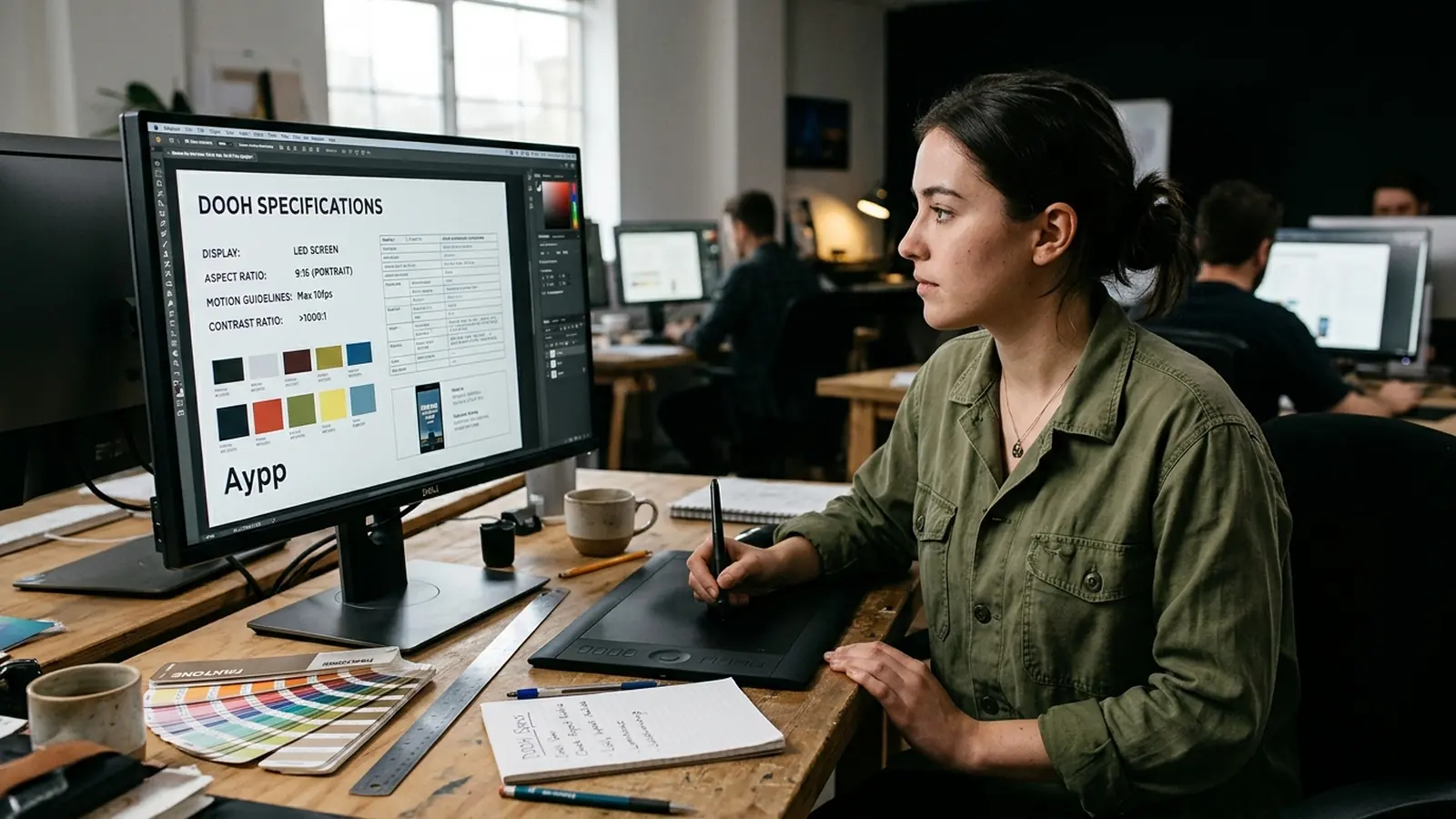
Triggers add timing. A campaign can be set to run only during certain hours, in certain weather, or when an external signal changes, such as a sports result or a local event. A cold-drink brand might run only when it is warm, while a coffee chain might favor early mornings near transit hubs. Triggers need clean data feeds and creative variants to match, which is why creative operations matter as much as media settings. We cover that side in our DOOH ad specs and creative guide.
It is also worth saying what targeting cannot do. A screen cannot see who is watching and cannot be personalized to an individual in the way a mobile ad can. Audience in pDOOH is a modeled estimate of the people near a screen, and good planners are honest about that.
5Ways to Buy: Open Auction, Private Marketplace and Direct
Programmatic does not mean only open auction. Most serious plans use a mix, matching the route to the objective.
- Open auction. Available screens are offered to all connected buyers, and the highest eligible bid wins each play. It offers reach and flexibility but gives you less control over exactly where you appear.
- Private marketplace (PMP). A media owner invites selected buyers to bid on a defined set of screens, usually with an agreed floor price. This gives more certainty on quality.
- Programmatic guaranteed. A fixed volume of plays is reserved at an agreed price, but delivery and reporting run through programmatic systems.
If you want detail on the commercial mechanics behind each route, see how programmatic DOOH pricing works.
Which route you choose changes how much you pay as well as where you appear. Open auction usually costs less per impression but offers less control, while private and guaranteed deals cost more in exchange for known inventory. Neither is better in every case, so most planners combine them.
6How Results Are Measured
Because a screen cannot track a click, measurement relies on different evidence. The first layer is delivery: proof that your creative actually played on the screens, at the times agreed. The second is audience: an estimate of how many people had the chance to see each play, based on traffic counts, mobility data or venue footfall. The third is outcome: whether people who were near the screens later visited a store, searched for the brand or bought the product.
Outcome measurement is possible through location-based studies, brand lift surveys and, for retail brands, comparison of sales in stores near the screens with sales elsewhere. None of these are as exact as a click-based conversion, and the best reports state their method plainly. Store-level studies are most useful when the screens sit near the places where the product is sold.
A word on expectations: pDOOH is strongest as a reach and awareness channel that supports others. It works well alongside retail media, connected TV and mobile, because the screen builds familiarity while other channels capture the response. Planning it as part of a wider mix, rather than as a stand-alone tactic, tends to produce more convincing results and clearer reporting.
7Getting Started Without Overcomplicating It
A first pDOOH campaign works best when it is narrow. Pick one objective, such as awareness in a handful of cities or traffic to specific stores. Choose a small set of venue types that suit it. Prepare creative that reads in a few seconds. Agree in advance how you will judge success and what data you will receive.
Many teams then discover that the work around the media, such as trafficking creative to multiple networks, checking approvals, monitoring delivery and reconciling reports, takes more time than expected. That is where an operations partner helps. Our programmatic DOOH advertising service covers planning, setup and ongoing management for agencies and brands, and the pDOOH buying workflow shows the steps in order. If you are choosing a partner, read how to choose a pDOOH campaign management partner first.