

Advertisers & Agencies
Programmatic DOOH Advertising
Planned, Bought and Proven
Programmatic DOOH advertising brings the targeting and control of digital buying to screens in the real world. AdOps Media plans, buys, traffics and reports on pDOOH campaigns for agencies and brands, so your team gets clean execution without building a desk of its own. Every campaign starts with a plan you can read.
Built for: Agencies, brand marketers and media planners
What's included
Our DOOH desk covers the full campaign path, from venue and audience planning to buying across several platforms and reporting that your clients can actually read.
pDOOH Planning and Buying
We build venue and audience plans, set up deals and bid strategies, and buy through the DSP and supply paths that fit each brief, with pacing reviewed daily.
Programmatic Media Buying & AdvertisingCreative and Trafficking
Screen specs differ by venue and network. We check ratios, file types and durations, load creative, set triggers and test it all before a single impression runs. Each asset is tested before launch.
Ad Trafficking & Campaign ManagementNear-Store and Retail Activation
We use screens around stores, malls and commuter routes to reach shoppers before they buy, and connect DOOH to retail media plans where it makes sense. Plans stay tied to real shopping routes.
Programmatic DOOH & Near-Store AdvertisingWhy teams choose it
One desk, many platforms
We work across the major DOOH DSPs and supply platforms, so the buy follows the brief and your media plan is not limited to one tool.
Clear, honest reporting
Reports separate delivered plays from estimated impressions and explain the method, so clients know exactly what they are looking at.
White-label by default
We work under your brand and your process. Clients see your team, while our specialists handle the setup, trafficking and daily checks.
Fewer launch errors
Specs, schedules, geo and trigger rules are checked before launch, which cuts wasted plays and last-minute creative rejections.
Services in this solution
Each part is delivered by the same AdOps Media team, so planning, execution and reporting stay in one place.
What DOOH and programmatic DOOH actually are
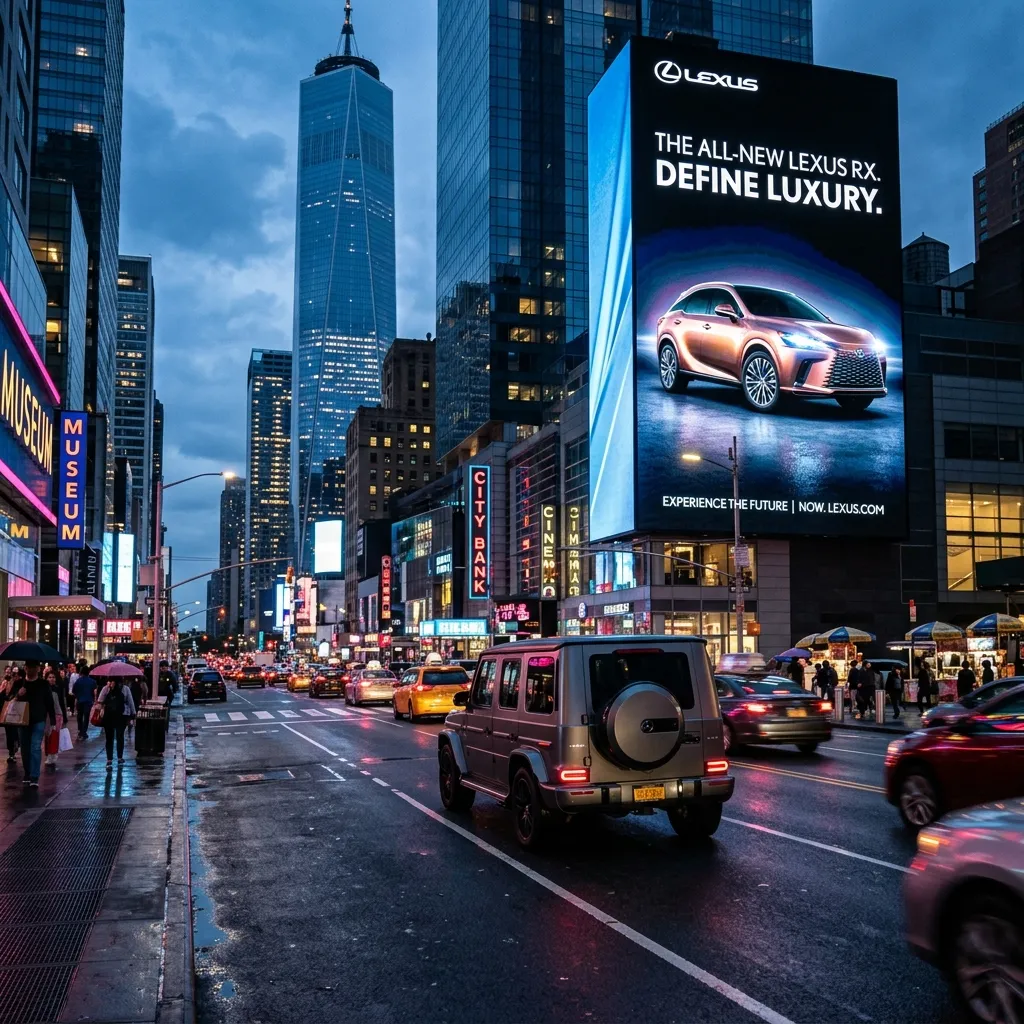
Digital out-of-home, or DOOH, is advertising on digital screens in public places: roadside billboards, airport displays, transit shelters, mall panels, gym and office screens, gas station pumps and screens on rideshare and taxi roofs. Unlike a printed poster, a digital screen can rotate many advertisers and change its message by the hour. Reach is broad, and the message can be tuned to place and moment.
Programmatic DOOH, or pDOOH, applies the same automated buying used online to those screens. Instead of negotiating a fixed package with each media owner, a buyer uses a DSP to bid for plays in real time or through set deals. For the difference in detail, see our guide to DOOH versus pDOOH and our explainer on what programmatic DOOH is.
Why does this matter for buyers? Because out-of-home is no longer a single booking made months ahead. Planners can combine DOOH with CTV, social and retail media in one plan, change venues while a flight runs, and judge results against clear goals. That makes DOOH easier to justify inside a wider media mix, provided the measurement is planned from the start.
Formats, venues and data-driven targeting
Venues fall into a few families. Roadside and street furniture offer broad reach. Place-based screens in airports, malls, gyms and offices reach people in a known context. Transit and rideshare screens follow movement. Each family has its own creative specs, which we cover in our DOOH ad specs and creative guide. Venue-led plans are explained on our page for airport, transit and rideshare DOOH.
Targeting in DOOH works differently from the web, because there is no cookie on a billboard. Buyers use audience estimates built from mobile location data, venue categories, proximity to stores or competitors, and time of day. Triggers go further: creative can change with weather, local events, sports scores or store stock. Every data source has limits, and we state them plainly in the plan, so nobody mistakes an estimate for a head count.
Creative matters as much as targeting. A message built for a glance at a roadside panel will not suit a terminal screen where people wait. We brief creative teams on format, text size and duration early, and we test playback so the first live impression looks the way the designer intended. Our creative checks cover safe areas, contrast, file weight and the first second of any video, because screens often show only a brief moment.
Platforms we buy through and how buying works
We work in the platforms agencies already use: Vistar Media, Hivestack, Place Exchange, The Trade Desk, DV360 and others, with supply from owners such as Clear Channel, JCDecaux, Outfront and Lamar. The right path depends on the venues, the data you need and the deal terms. Our platform comparison explains the trade-offs, and our page on Vistar Media campaign management goes deeper on one DSP.
Buying usually runs on a CPM basis, adjusted for the audience a screen is expected to reach, through open auction, private marketplace deals or guaranteed programmatic. Our pDOOH buying workflow and pricing explainer show each step. Measurement closes the loop with proof of play, impression multipliers and optional footfall or brand lift studies, covered on our DOOH measurement and attribution page.
Agencies can ask us to take on the whole operating layer: deal setup, trafficking, daily checks and reporting. That is our core work, and it is why we recommend starting with a small, well-defined campaign. You see how we run, and the model scales from there. Retail and CPG teams can connect this to near-store pDOOH and wider retail media plans.
Illustrative example: a sample pDOOH plan
This is an example, not a client result. A retail brand wants to reach commuters near its stores. The plan uses roadside digital billboards and transit screens in three cities, bought through a DSP such as The Trade Desk or DV360, with deals from supply platforms such as Vistar, Hivestack or Place Exchange.
The budget is split by venue type, with weekday morning and evening dayparts weighted up and a lower share held for testing. Creative is built to each screen's ratio and length. The plan states how delivery will be proved (proof of play) and how impressions will be estimated, so the report matches what was promised.
What you get at the start
Every campaign starts with a plan you can read. You receive:
• A venue and audience plan with the reasons for each choice.
• A creative spec sheet by screen type.
• A trafficking and QA checklist, including geo and schedule checks.
• A reporting plan stating which measures are counted (plays) and which are modeled (impressions).
Decision criteria: choosing venues and buying route
Decide first whether the goal is reach, a local audience or a moment (such as travel or fueling). Then check which venues cover the places that matter, whether supply is open or only available through a direct deal, and whether your creative fits the screens.
Ask any provider how they confirm that an ad actually played, how impressions are estimated and what they do when a screen goes offline.
How it works
Brief and venue plan
We turn goals, geography and budget into a venue mix, audience logic and a shortlist of platforms to buy through.
Setup and QA
We configure deals, targeting and triggers, check every creative spec, and test playback before the flight goes live.
Live optimization
We watch pacing, delivery and screen availability, then adjust bids, venues and dayparts as the campaign runs.
Measure and report
We deliver proof of play, audience estimates and any study results, with a plain-language summary of what they mean.
More advertisers & agencies solutions
Outsourced Ad Operations
A dedicated, white-label ad ops team for trafficking, yield optimization and campaign management, without the cost of building one in-house.
Managed Ad Services
End-to-end campaign execution, programmatic yield optimization and dedicated ad ops support for agencies and publishers.
White-Label Programmatic Desk
A programmatic trading desk that works under your agency brand: buying, optimization, deal management and reporting, without growing your own team.
Campaign Launch and QA Desk
An outsourced setup, pre-launch QA and pacing-monitoring desk for agencies running many launches, so campaigns go live clean and stay on plan.
Vistar Media Campaign Management
Hands-on Vistar Media campaign management for agencies and brands: deal setup, targeting, trafficking, optimization and reporting across connected DOOH supply.
Airport, Transit and Rideshare DOOH
Venue-based programmatic DOOH planning and buying across airports, transit, rideshare and taxi-top screens and gas station networks, run white-label.
DOOH Measurement and Attribution
DOOH measurement and attribution support: proof of play, impression multipliers, footfall and brand lift studies, and ways to connect screens to sales.
FAQ
What is programmatic DOOH advertising?
It is the automated buying of ad plays on digital out-of-home screens through a DSP, using data such as location, time of day and context. You get more control over targeting, budget and timing than with a fixed package booked directly with a media owner.
How is pDOOH different from buying a billboard directly?
A direct buy usually means a fixed location, a fixed period and a negotiated rate. A programmatic buy lets you run across many screens, adjust venues and schedule during the flight, and pay per play or impression-based unit rather than per site.
Which venues can we buy?
Common options include roadside billboards, street furniture, airports, transit, malls, gyms, office buildings, gas stations and rideshare screens. Available inventory depends on the platform and the market, so we confirm supply for your geography before we build the plan. We also flag where programmatic access is limited.
How do you measure a DOOH campaign?
We start with proof of play, then apply the audience estimates your chosen method supports. Where the goal justifies it, we add footfall, brand lift or sales studies. We explain each method's limits so results are read correctly. See our proof of play guide.
Can you work white-label for our agency?
Yes. We work under your brand, inside your approvals and reporting format, and our team handles planning support, setup, trafficking and daily monitoring. You keep the client relationship, and we can start with a single campaign before scaling up. Reporting follows your template.
How is pDOOH management priced?
Planning and buying support for pDOOH is usually priced as a monthly retainer, a per-campaign fee or a percentage of media. We propose the model that matches your volume: a per-campaign fee for occasional flights, a monthly retainer for steady activity. Media is bought at CPM through the platform, and our fee is stated separately in writing before work starts.
Ready to talk it through?
Tell us about your team, platforms and goals, and we'll suggest how our Programmatic DOOH Advertising Services service would work for you.