

For a consumer goods brand, the most useful screen is often the one a shopper passes on the way to buy. A panel beside a grocery entrance, a screen in a pharmacy waiting area or a digital poster near a convenience store all sit close to the point of sale. That proximity is why retail and CPG teams keep asking whether digital out-of-home belongs in the same plan as their retailer media budgets.
In short: DOOH works for retail and CPG when screens are chosen for their closeness to shopping behavior, when retailer data shapes who and where you target, and when measurement compares exposed and unexposed shoppers instead of simply counting impressions. Near-store screens are bought programmatically and can be planned around store trade areas. In-store screens are usually sold by the retailer and sit inside its retail media offer. Sales impact is measurable, but only with a test design agreed before launch.
1Why Retail and CPG Brands Use DOOH
Most of what a CPG brand sells is bought on a short trip, often with little deliberation. Online ads reach people at home or on a phone, which can be hours or days away from the shelf. Out-of-home reaches them while they are already moving toward a store, which makes it a natural fit for reminder messages, new product launches and promotions with an end date.
DOOH adds two things that classic billboards could not offer. Creative can change by time of day, weather or nearby store, and campaigns can be bought programmatically with the same planning tools used for other digital channels. If you are new to the mechanics, our overview of what programmatic DOOH is explains how screens are bought through supply platforms, and the programmatic DOOH advertising page describes how we run these campaigns for agencies and brands.
Retail and CPG also have a structural reason to care. Brands sell through many retailers, each with its own media network, rules and reporting. Public screens near stores are one of the few places where a brand can reach shoppers of several retailers with one consistent message and one buying process. That makes DOOH a useful bridge between the retailer-specific plans in a retail media budget and the wider brand campaign.
2Near-Store and In-Store Screens Compared
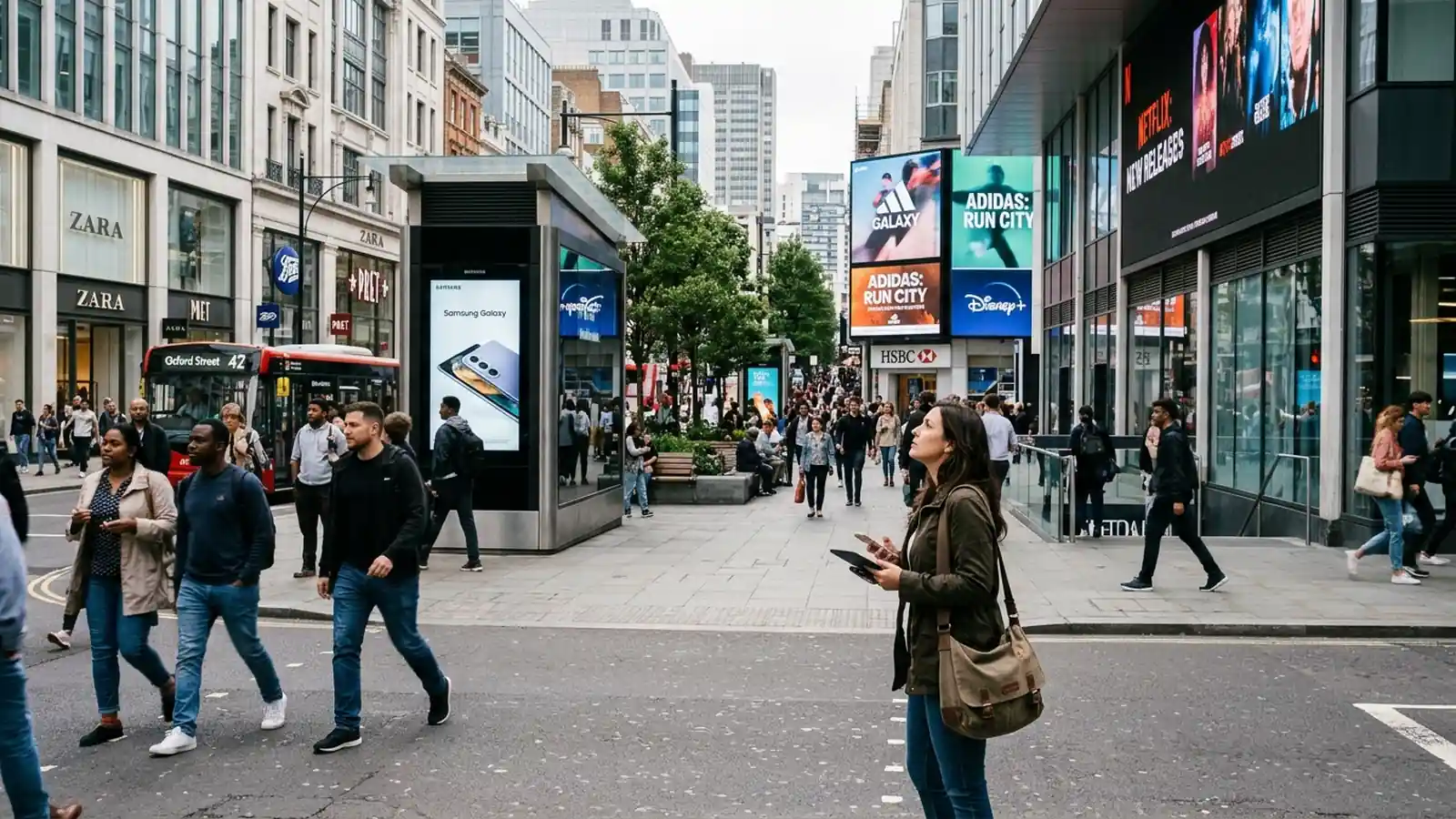
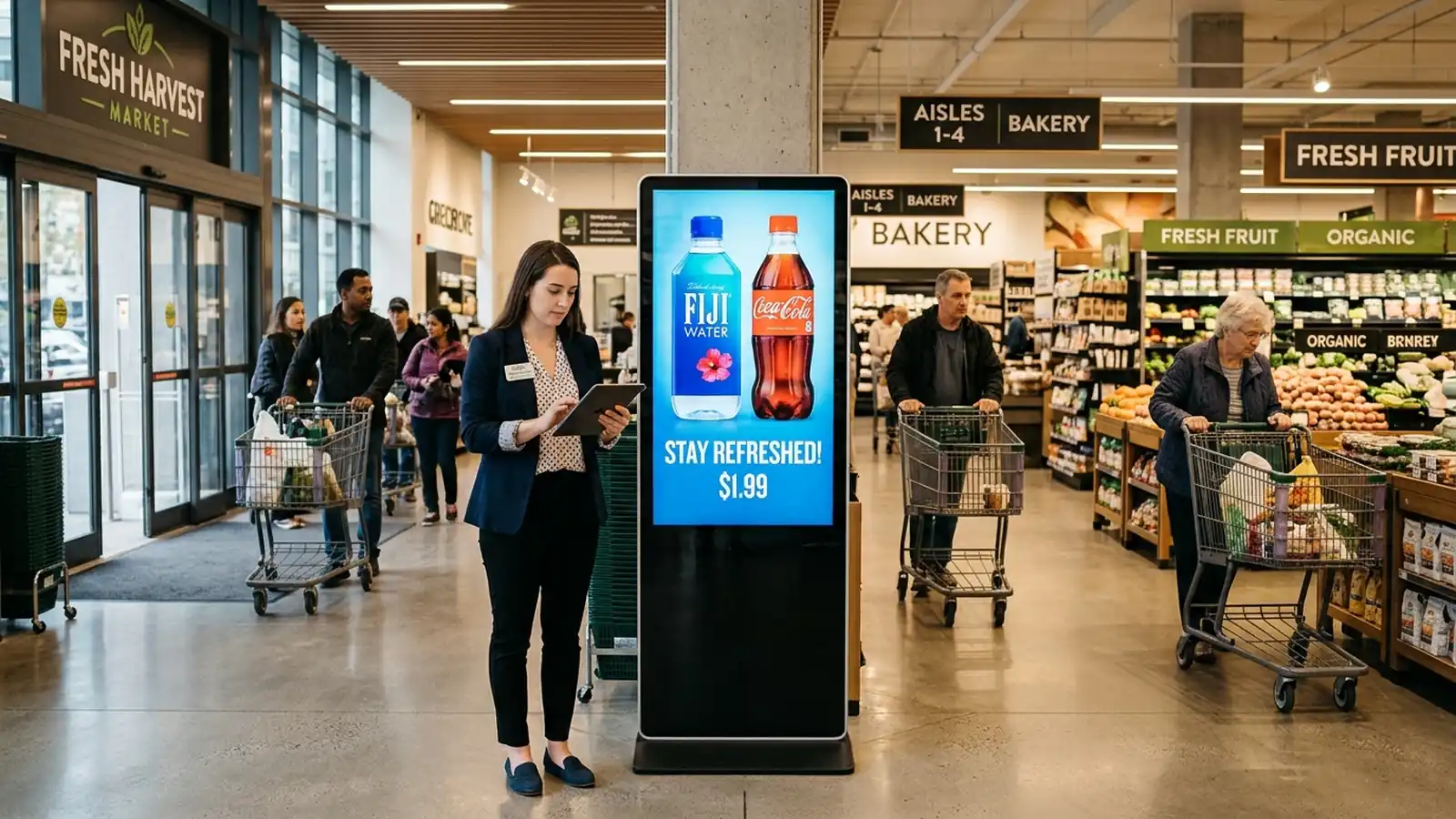
Retail DOOH is really two different products that share a name. Near-store screens are public inventory around a shopping area: roadside panels, transit shelters, screens in malls and car parks, digital posters in shopping centers. In-store screens are inside the retailer's own space, such as checkout displays, aisle screens and screen walls, and are sold by the retailer as part of its media network.
| Factor | Near-store screens | In-store screens |
|---|---|---|
| Who sells it | Media owners, through supply platforms and demand platforms | The retailer, usually through its retail media network |
| How it is bought | Programmatic or direct, often with deal IDs | Direct booking or a self-serve retail media platform |
| Targeting | Location, daypart, audience data applied to the screen | Store, department, sometimes shopper segments |
| Measurement | Store visit studies, panel data, sales lift if a data partner is involved | Retailer sales data, often compared with unexposed stores |
| Best for | Awareness and reminders ahead of the shopping trip | Influencing the choice at the shelf |
Our near-store pDOOH advertising service covers the first column, and the in-store retail media service covers the second. Many brands use both, with near-store screens building awareness and in-store screens closing the sale.
When choosing between them, ask what you want the shopper to do. If the aim is to put the brand in mind before the trip, near-store screens fit. If the aim is to influence which product goes into the basket, in-store placement is closer to the decision. The two also differ in how much control you have: public inventory can be filtered and scheduled in detail, while in-store screens depend on the retailer's own booking rules and available formats.
Other venues fit the retail journey too, including gyms, pharmacy counters, cinema lobbies and transit hubs that sit on common routes to shopping areas. Pick them by looking at where your category buyers actually travel, not simply by how large a screen network is.
3Using Retailer Data to Plan the Buy
Retailer data is what separates a retail DOOH plan from a general out-of-home plan. Retail media networks such as Walmart Connect, Kroger Precision Marketing, Tesco Media and Insight or Sainsbury's Nectar360 know which households buy a category, which stores sell the most of a product and which shoppers are lapsed. Some can share segments built from that knowledge with outside platforms, subject to privacy rules and their own policies.
In practice, retailer data helps in three ways. It points to the stores and trade areas where a brand has the most to gain, so screens near those locations get priority. It supplies audience segments, such as category buyers or competitor buyers, that a demand platform can match to the places those people travel. And it provides the sales data against which the campaign is judged. Not every retailer will share every data type, and what is available varies by market, so confirm the terms before you build a plan around them.
It also helps to agree early who will hold the data and where analysis will happen. Many retailers prefer that shopper-level information stays inside their own environment or inside a clean room, with only aggregated results shared back. That is a sensible privacy position, but it means the measurement plan has to be designed with the retailer from the start. Our clean room attribution service covers how this kind of analysis is set up.
4Creative and Timing That Suit the Shopping Trip
A screen near a store is seen for a few seconds, usually by someone in motion. Good retail creative therefore carries one message, shows the pack clearly and uses the retailer or promotion as the call to action. If the product is on offer, say where. If it is new, show what it looks like on the shelf. Our DOOH ad specs and creative guide covers the technical side of formats and file requirements.
Timing matters as much as design. Weekend shopping peaks, payday weeks, school holidays and seasonal events all change when people head to stores. Programmatic buying lets you weight delivery toward these windows, switch creative as stock levels change and pause when a promotion ends. That flexibility is easy to waste if the creative set is thin, so plan several versions before launch.
Coordination with retail partners deserves a mention here. Retailers often have rules about how their name, logo and promotional claims can appear in third-party ads, and offers must match what is actually on the shelf. Check these requirements before the creative is finalized, because a late rejection can cost the first week of a campaign. Keep a simple calendar of promotion dates, creative versions and approvals so that screens never show an expired offer.
5Measuring Sales Impact
Out-of-home impressions are estimates of opportunity to see, not proof that a shopper noticed the ad. To show sales impact, you need a comparison. The common designs are exposed versus control groups, where shoppers who passed a screen are compared with similar shoppers who did not, and market tests, where some regions run the campaign and matched regions do not.
- Store visit lift: did exposed devices visit the retailer more often than a control group?
- Sales lift: did exposed households buy more of the product, measured through retailer or panel data?
- Market test: did sales rise in test regions relative to matched regions?
- Promotion redemption: did coupon or code use rise where screens ran?
Each method answers a slightly different question, and none is perfect. Our DOOH measurement and attribution page describes how we set these up, and the principles are the same as in retail media incrementality testing: define the control group first and agree the success measure before the campaign starts.
Be careful with the word incremental. A rise in sales among people who saw a screen is not necessarily caused by the screen, since people who shop near a store are more likely to buy there anyway. The control group is what separates the effect of the campaign from the habits of the audience. If a clean control group is not possible, say so in the report and describe the result as an indication, not a proof.
6Common Mistakes in Retail and CPG Campaigns
The first mistake is treating DOOH as a separate silo. If the same shopper sees a sponsored ad on a retailer app, a screen near the store and a display ad elsewhere, results are muddled unless the channels are planned and measured together. Our guide to offsite retail media across CTV, social and DOOH shows how to link them.
The second is buying a large area when a small one would do. A store-level plan built around trade areas is usually more efficient than a city-wide buy, because most of the shoppers a store serves come from nearby. The third is reporting only delivery. Impressions and screen counts tell you the campaign ran, not that it worked. Finally, creative that does not name the retailer or the offer asks the shopper to do the work, and many will not.
A further mistake is judging a short campaign on a long buying cycle. Household products may be bought only every few weeks, so a campaign that lasts a few days may show no change in sales even when it worked. Match the measurement window to how often the category is bought, and allow for the time it takes for retailer data to be reported.
7Getting Started Without Overcommitting
A sensible first test uses a limited set of stores or markets, a single product or promotion, and a control group built from similar areas. Agree the question you want answered, the data needed to answer it and who is responsible for each part. Then run it long enough to see more than one shopping cycle.
If you are comparing buying platforms or support partners, the DOOH and pDOOH platform comparison and the guide on choosing a pDOOH campaign management partner are useful starting points. For the buying process itself, see our pDOOH buying workflow.